
- This event has passed.
Muscle Sensors and Brain Sensors – Controlling Prosthetics for Enhanced Mobility
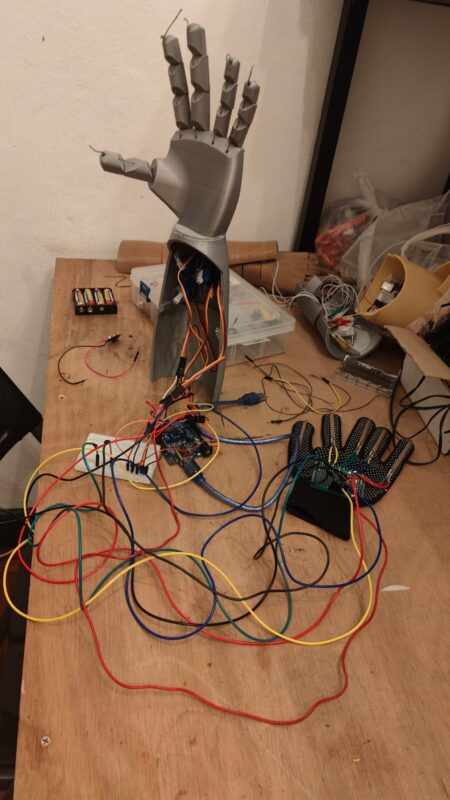
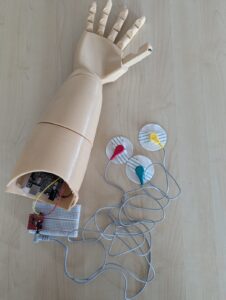
The first microcontroller powered muscle sensor controlled prosthetic device.
Makerbox is very proud of our co-founder and in-house Electrical Engineer Konemany Kanlaya who has developed the first ever robotic prosthetic hand in the Lao PDR using biosensor technology (electromyography EMG) and low-cost 3D printing technology.
From his hobby of building small, fun robots on weekends at Makerbox, to a device that can make real change in the lives of thousands of people and society.
Starting out with the simple idea of wanting to create a prosthetic hand, Kone’s project has grown into something truly remarkable with the goal of creating a device that will help the thousands of victims of unexploded ordnance and accidents in Laos – in line with the UNDP’s stated sustainable development goal (SDG-18) of “lives safe from Unexploded Ordnance (UXO).
We support Kone’s work wholeheartedly, and look forward to future iterations of this excellent project.
We would also like to thank several organizations for their kind assistance and support :
Prosthetics and Orthotics Workshop Center, Mitthaphab Hospital’s Department of Neurology, and the Department of Mechanical Engineering, National University of Laos.
Anyone who would like to have more information, please visit: www.k-kanlaya.com
Visit the video:https://www.facebook.com/watch/?v=413750138320994
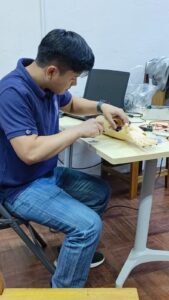
The microcontroller and installation before testing fo the prosthetic arm.
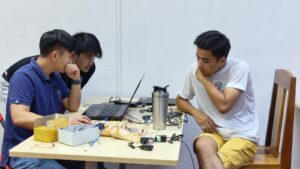
Consultation and cooperation – robotics, electronics, programming, design and cooperation to create the very first microcontroller and muscle sensor prosthetic device prototype.
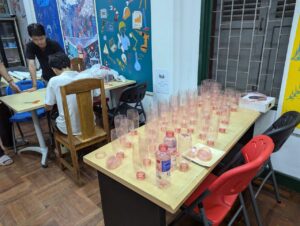
The water bottled recycled into 3D filament.
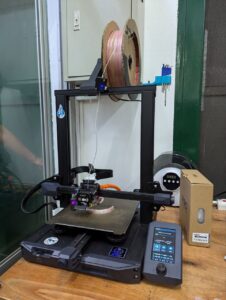
The initial 3D print of a prosthetic arm with recycled rPET from drinking water bottles.
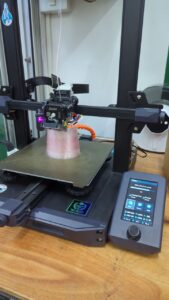
The 3D print in progress
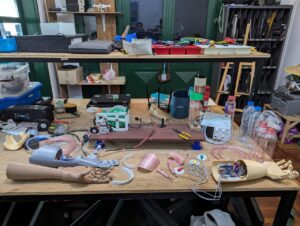
From a rudimentary 3d Filament extruder to a prosthetic prototype. A creator’s work bench.
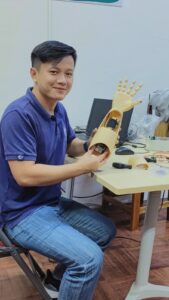
Konemany showing the first iteration of his prosthetic device.